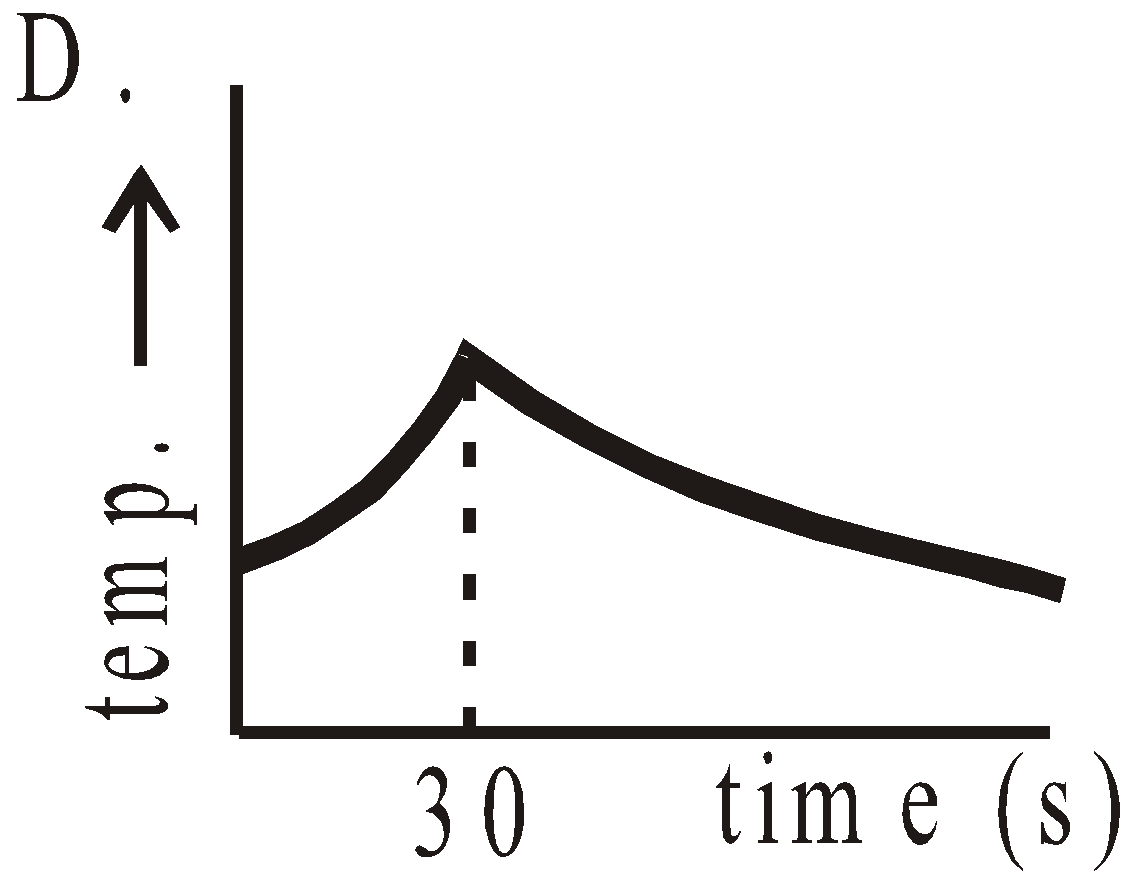
A student wants to find the specific heat of a dark oil. She pours 100 grams of the oil into a glass beaker of negligible mass, and then submerges a small 50-watt light bulb in the oil. (A watt is a joule per second.) Before the student turns on the light bulb, the oil is at 20° C, room temperature. The student then seals the top of the beaker and turns on the light bulb, at time t = 0. She can see some light coming from the bulb, though it looks much dimmer than usual. A small magnetic stirrer ensures that the oil has a uniform temperature throughout the beaker, at all times. A thermometer keeps track of the oil’s temperature. See figure.
After the light bulb has been on for 40 seconds, the student switches it off. The oil’s temperature at that moment is 30° C. The student immediately unseals the top of the beaker and removes the light bulb.
When the top of the beaker is sealed, assume that negligible heat is absorbed by the beaker or escapes into the environment.
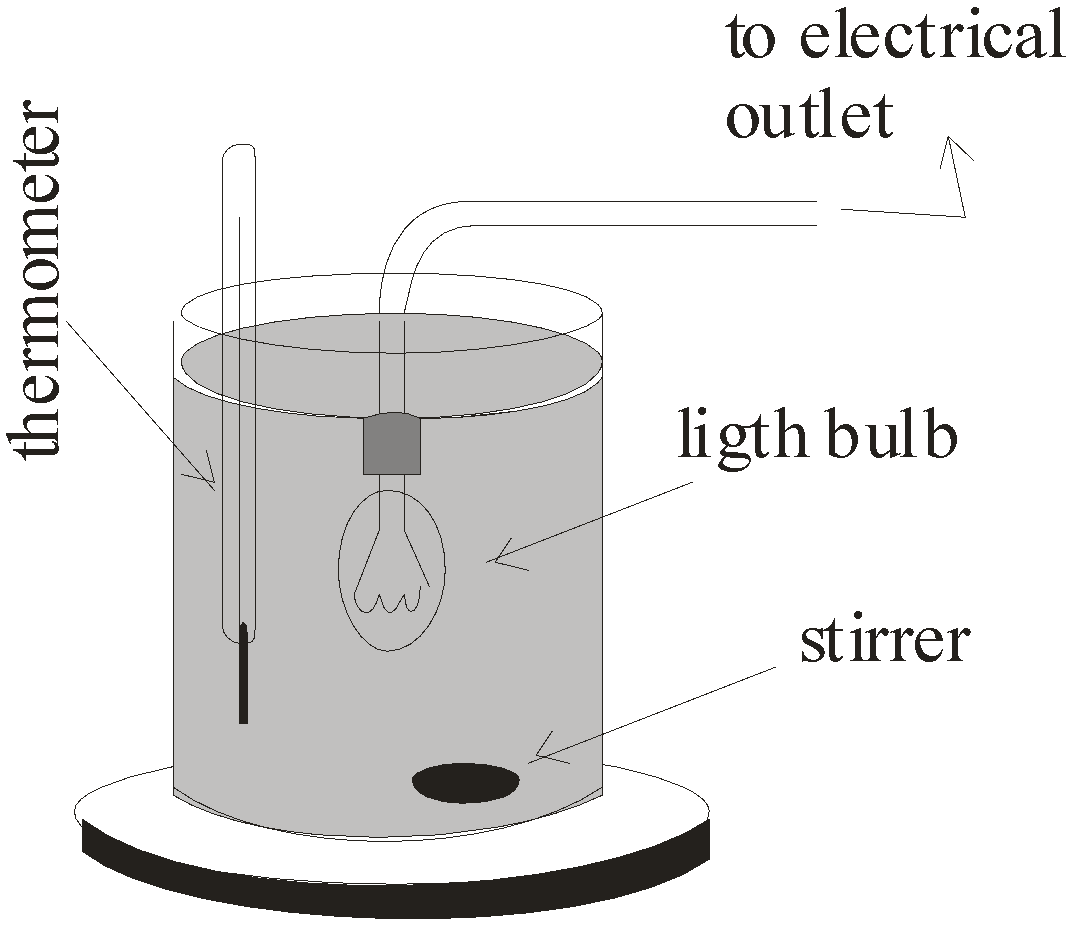
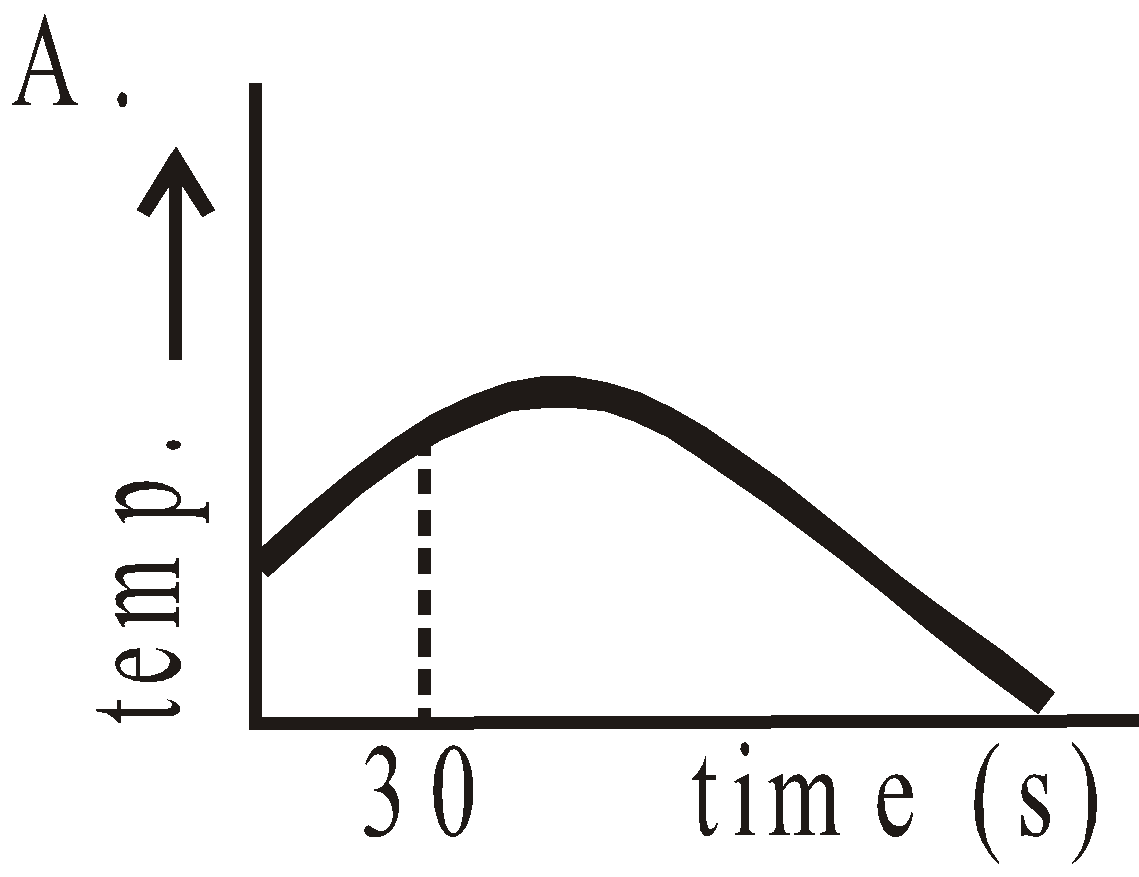
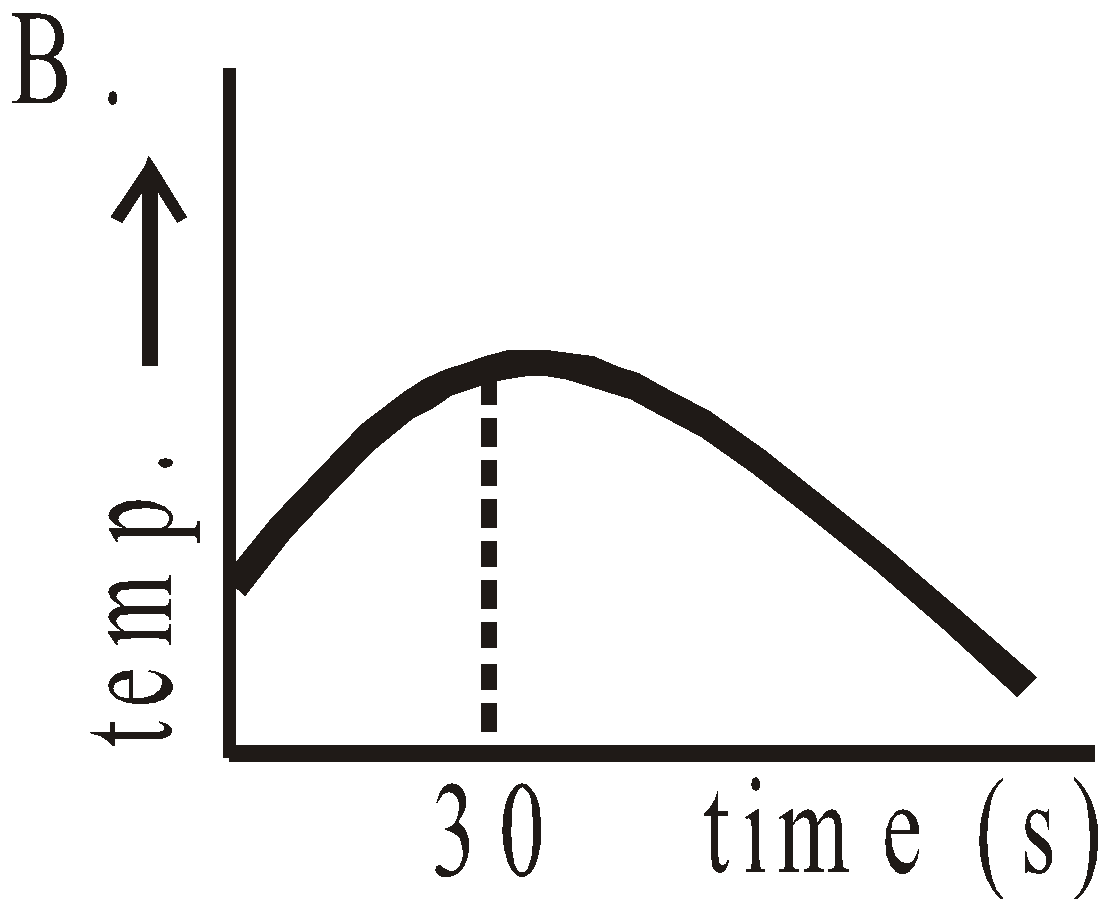
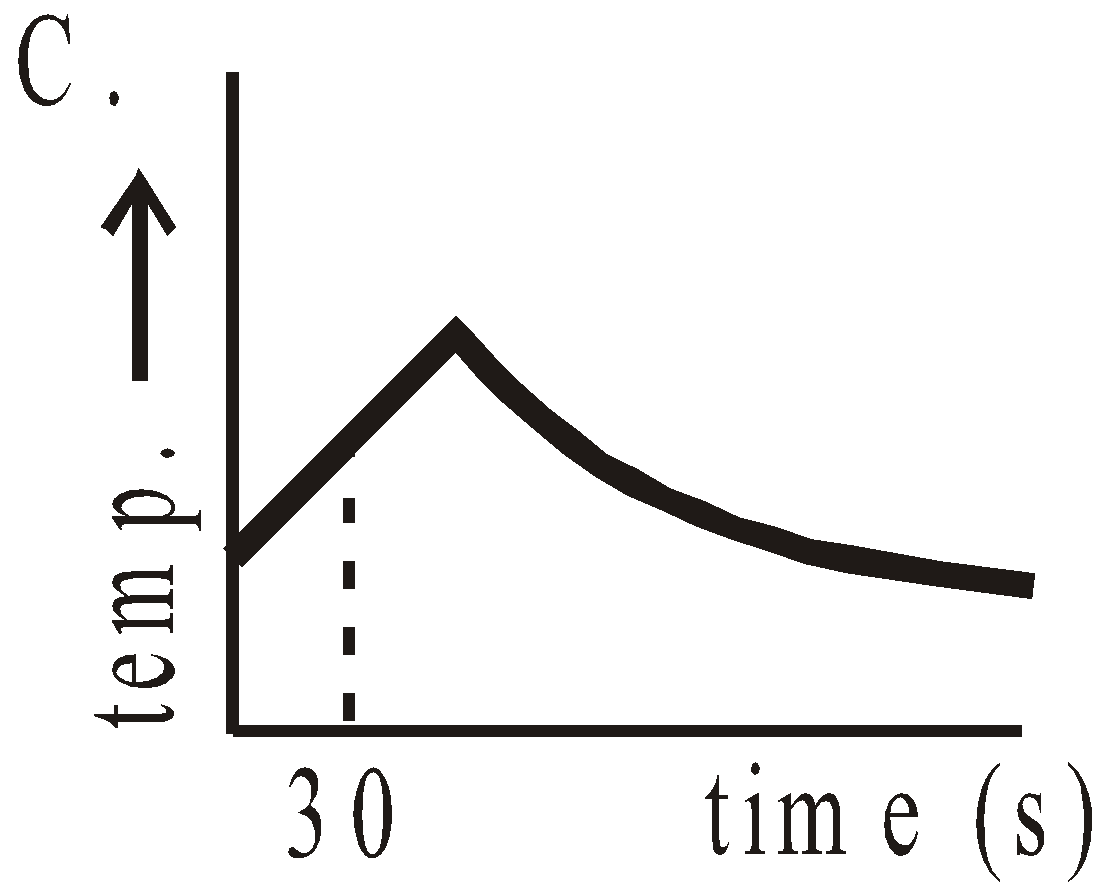
(i) Which of these graphs best shows the temperature of the oil as a function of time?
Text Solution
Verified by ExpertsCHECK THE SOLUTION.
Ans.
(i)
Sol.
(ii)
Sol. 0.2
(iii)
Sol. 50 0 C
Prepare Smarter with CGP Edu
Get practice questions, solutions, and test series in one place.
Write a Review
Share your experience with this question and solution.
Commentary
Send your comment, doubt, correction, or feedback to admin.
Similar Questions
Explore conceptually related problems